How compounded medications are made — from prescription to your door
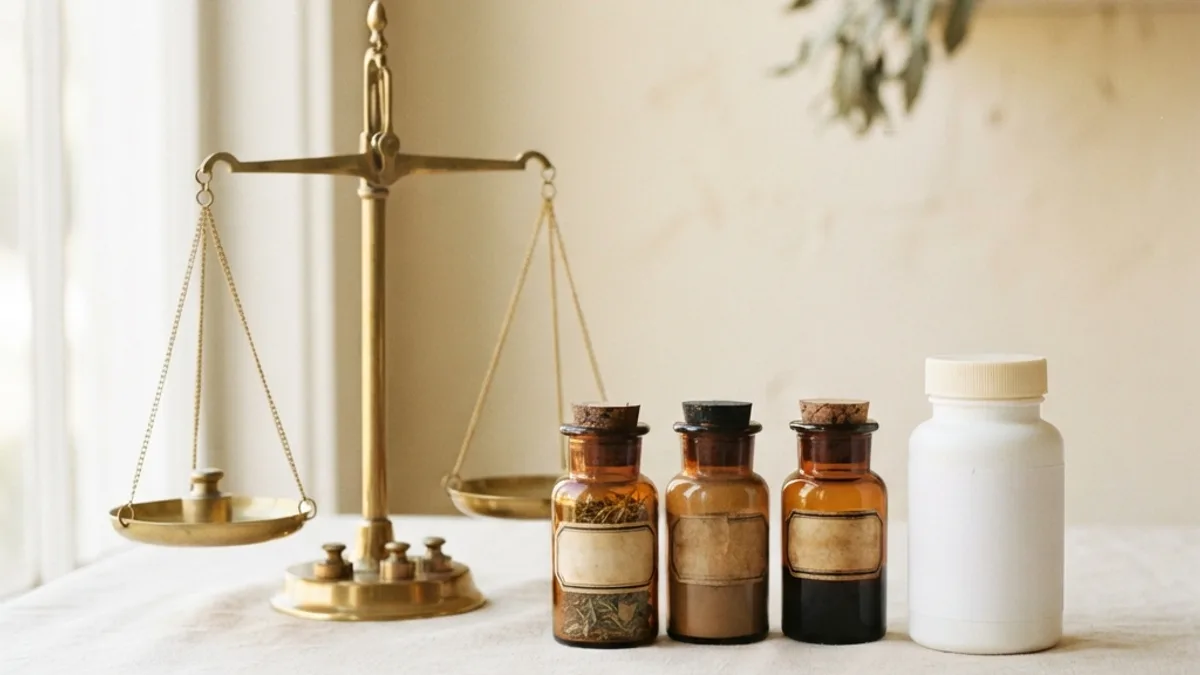
Short version: A compounded medication is prepared to order by a licensed pharmacy after a provider writes a prescription for a specific patient. It's made either in a state-licensed 503A pharmacy (patient-by-patient) or an FDA-registered 503B outsourcing facility (larger batches for clinics), using quality standards for ingredients and preparation. The FDA and state boards regulate the pharmacies and their standards rather than approving each compounded product — so where it's made, and who oversees it, is what matters most.
Verendia is a Better Health partner and earns a commission when you sign up through our links, at no extra cost to you — it never changes what we cover. Educational only, not medical advice; talk to a licensed provider. Full details →
You order almost everything else off a shelf. A compounded medication is different: it doesn’t exist until a provider prescribes it and a pharmacy makes it. Understanding that process is the single best way to tell a careful source from a careless one — because with compounding, the how and the who matter more than the label on the box.
Here’s the whole path, in plain English, sourced to the FDA.
It starts with a prescription — not a shopping cart
A legitimate compounded medication begins with a licensed provider evaluating you and writing a prescription for your specific situation.[1] That’s not red tape — it’s the step that makes everything after it legitimate. Any site offering to sell you a prescription medication with “no prescription needed” has skipped the one part of the process that’s actually about your safety.
So before anything is measured or mixed, a real clinical decision has already happened. Keep that order of operations in mind; it’s the tell.
Where it’s actually made: 503A vs. 503B
Compounded medications come from two kinds of licensed facility, named for sections of federal law.[2]
- A 503A pharmacy compounds patient-specific preparations — made for you, against your prescription. These are licensed and overseen by state boards of pharmacy.
- A 503B outsourcing facility can make larger batches for clinics and providers to keep on hand. These register with the FDA, are inspected, and follow current good manufacturing practice (cGMP) standards.[4]
Both are legitimate parts of the medication system. The difference is scale and oversight — and a trustworthy source can tell you which kind of pharmacy prepares your medication.
Inside the pharmacy: ingredients, preparation, and quality
Once a prescription arrives, the pharmacy prepares the medication using pharmaceutical-grade ingredients and established quality standards for how it’s measured, combined, and handled.[1] A 503B facility does this under the same category of manufacturing-quality rules (cGMP) that apply to larger-scale drug production.[4]
What compounded medications don’t get is the FDA’s product-by-product pre-market review. The FDA regulates the pharmacies and their standards rather than approving each individual compounded formula.[1] That’s not a loophole — it’s simply how oversight works for medicine made per-prescription instead of mass-manufactured. But it’s also exactly why the quality of the specific pharmacy carries so much weight.
Who’s watching: the oversight layer
Compounding sits under real oversight, just structured differently from approved drugs:[3]
- State boards of pharmacy license and monitor 503A pharmacies.
- The FDA registers, inspects, and sets cGMP expectations for 503B outsourcing facilities, and enforces the federal rules that govern both.
The takeaway isn’t “trust blindly” or “be afraid” — it’s that legitimate compounding happens inside a real regulatory framework, and the sources worth using are the ones operating openly within it.
How it reaches you
After it’s prepared, your medication is labeled with your prescription details and shipped — often with cold-chain handling (temperature-controlled packaging) when the preparation requires it. Some medications travel with batch documentation; a certificate of analysis may be available on request where the source pharmacy provides one. None of that should be mysterious. A source that’s straight with you about what documentation comes with your order is a source being straight with you generally.
What this means when you’re choosing a source
Now that you know the process, the checklist writes itself:
- Is a licensed provider evaluating you first? If not, walk away — that’s the step that makes the rest legitimate.
- Will they tell you where it’s made? A legitimate source can name the licensed pharmacy or 503B facility behind your medication.
- Is it prepared from a real prescription, for a real patient? “Research chemical” or “not for human consumption” language is a signal to leave.
Understanding how compounded medication is made turns a scary-sounding label into something you can actually evaluate. That’s the whole point: informed beats afraid, every time.
Common questions
How are compounded medications made?
A licensed pharmacy prepares them to order from a valid prescription — measuring and combining ingredients for one patient's needs, following established pharmacy quality standards. It happens in a 503A pharmacy (patient-specific) or a 503B outsourcing facility (batches for clinics), not on a factory line and not in a home kitchen.
Who actually makes a compounded medication?
A licensed pharmacist (and trained pharmacy staff) at a state-licensed compounding pharmacy or an FDA-registered 503B outsourcing facility. A legitimate source will tell you which pharmacy prepares your medication.
Are compounded medications tested for quality?
Compounding pharmacies follow quality standards for their ingredients and processes, and 503B outsourcing facilities operate under FDA current good manufacturing practice (cGMP) requirements. What compounded products don't get is the FDA's product-by-product pre-market review — which is exactly why the pharmacy's standards matter so much.
Is a compounded medication made just for me?
In a 503A pharmacy, yes — it's prepared for you against your prescription. A 503B outsourcing facility can make larger office-use batches for clinics without a per-patient prescription, but those still go to licensed providers, not sold over the counter.
How long does it take to get a compounded medication?
It varies by pharmacy and preparation, because it's made after your prescription rather than pulled off a shelf. A provider evaluation comes first; the pharmacy then prepares and ships it, often with cold-chain handling where the medication requires it.
Wondering if a compounded option is right for you?
Whether any compounded medication fits your situation is a decision a licensed provider makes after reviewing your history. Here's how an online evaluation works.
Get evaluated by a licensed provider →Sources
- FDA — Compounding and the FDA: Questions and Answers (compounded drugs are prepared to order and are not FDA-approved or reviewed for safety, effectiveness, or quality before dispensing)
- FDA — Human Drug Compounding (503A pharmacies and 503B outsourcing facilities: what each is and how they operate)
- FDA — Compounding Laws and Policies (sections 503A and 503B of the FD&C Act; the Drug Quality and Security Act of 2013)
- FDA — Registered Outsourcing Facilities (the public list of FDA-registered 503B facilities operating under cGMP)